Base Oil: Types, Grades, and Applications

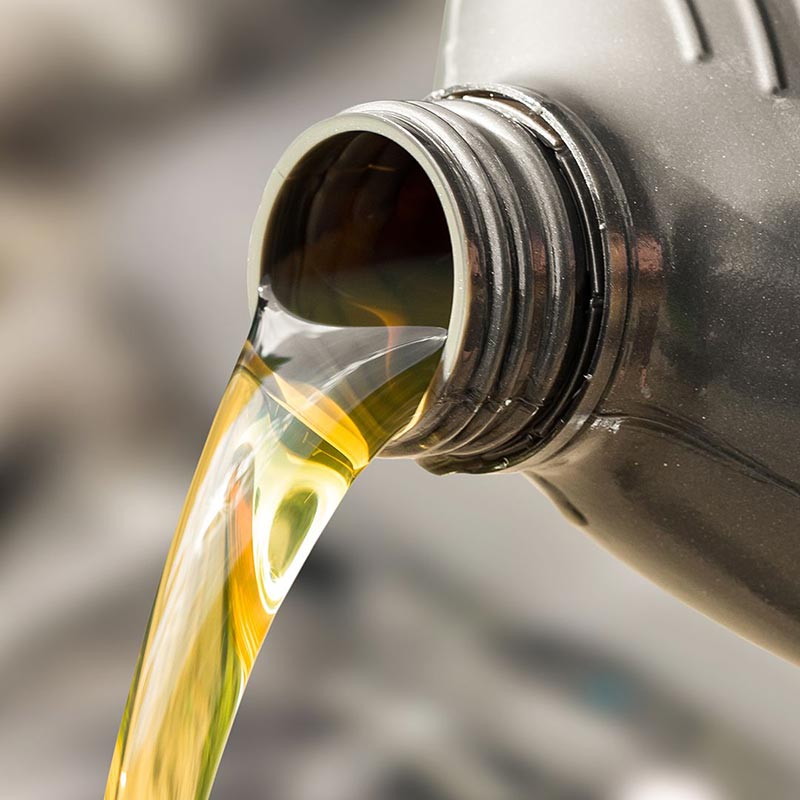
Base oil is the primary raw material used in the production of lubricants, greases, additives, and various industrial fluids. It is derived from refining crude oil or through advanced chemical processes such as hydrocracking and gas-to-liquid (GTL) technology. The performance, stability, and quality of finished lubricants depend heavily on the grade and purity of the base oil used.

Group I (Solvent Refined Base Oil)

  • Produced by solvent extraction
  • Contains higher sulfur and aromatics
  • Viscosity Index (VI): 80–120
  • Color: darker

Applications:

  • Industrial lubricants
  • Engine oils for older vehicles
  • Greases
  • Processing oils

Group II (Hydrotreated Base Oil)

  • Higher purity due to hydrotreating
  • Low sulfur and aromatics
  • VI: 90–120
  • Better oxidation stability

Applications:

  • Modern engine oils
  • Hydraulic oils
  • Transmission fluids
  • Marine lubricants

Group III (Hydrocracked / Synthetic Base Oil)

  • Highly refined through hydrocracking
  • VI: >120
  • Very low impurities
  • Considered “synthetic” in many markets

Applications:

  • High-performance engine oils (synthetic)
  • Automatic transmission fluids (ATF)
  • Premium industrial lubricants
  • Low-temperature and high-temperature applications

Group IV (PAO – Polyalphaolefin)

  • Fully synthetic base oil produced from chemical synthesis
  • Excellent thermal, oxidative, and viscosity stability

Applications:

  • High-end synthetic engine oils
  • Aviation lubricants
  • Gear oils
  • Extreme temperature environments

Group V (Others: Esters, PAG, AN, etc.)

  • Specialized base oils not included in Groups I–IV
  • Used as additives or for special formulations

Applications:

  • Refrigeration oils
  • Aviation and aerospace lubricants
  • Biodegradable lubricants
  • High-performance synthetic blends